



Introduction
You've clipped in, put in the miles, and pushed through the burn. The climb is done, the descent is behind you, and the ride data is already syncing to your app. But what happens the moment you unclip and step off the bike?
For most cyclists, the answer is: not much. A quick stretch at best, then straight into regular shoes, flip-flops, or bare feet. Training plans are meticulously structured. Nutrition is dialled in. Sleep is tracked. And yet the transition from bike to ground — one of the most important moments in the recovery process — is almost universally ignored.
Recovery footwear is standard practice in running, football, and team sports. In cycling, it's still largely overlooked. That's starting to change. Here's why cyclists, from weekend warriors to competitive riders, are making recovery sandals and slides a non-negotiable part of their post-ride routine — and what to look for when choosing a pair.
What Cycling Actually Does to Your Feet and Body
Cycling is widely celebrated as a low-impact sport. And compared to running, it is — there's no repetitive ground strike, no jarring impact through the joints with every stride. But low-impact doesn't mean no impact. After a long ride, your body is dealing with a specific set of stresses that are easy to underestimate.
Foot compression
Cycling shoes are engineering marvels — stiff carbon or composite soles designed to transfer every watt of power directly to the pedal. What they are not designed for is comfort over time. After two, three, or four hours in the saddle, your feet are compressed, warm, and often slightly swollen. The narrow toe box and rigid structure that make cycling shoes so efficient also restrict natural foot movement and blood flow for the entire duration of the ride.
Muscle fatigue in the lower legs
The pedal stroke engages far more than your quads and glutes. Your calves, Achilles tendon, and plantar fascia all play an active role — particularly during climbs, high-cadence efforts, and out-of-the-saddle accelerations. Over the course of a long ride, these structures accumulate fatigue. The Achilles and plantar fascia in particular are placed under repeated eccentric load, making them vulnerable to overuse injuries if recovery is neglected.
Reduced circulation
The static position on the bike, combined with tight shoes and sustained muscular contraction, can restrict blood flow to the feet. Once you stop pedalling, circulation needs to normalise. This process is slower than most people realise — and stepping into unsupportive footwear immediately after a ride can interfere with it.
Joint stiffness
Knees, hips, and ankles are held in a fixed, repetitive range of motion for extended periods on the bike. The body adapts to this position during the ride. Stepping off and immediately loading those joints in a different pattern — especially without proper support underfoot — can create stress on structures that aren't yet ready for it.
Thermal regulation
Feet generate significant heat during exercise. Cycling shoes, by design, limit airflow. After a ride, feet need to cool down and breathe. Trapping them immediately in trainers or socks delays this process and can contribute to discomfort, blistering, and skin irritation over time.
The transition from bike to ground matters more than most cyclists realise. And it starts with what you put on your feet.
Why Regular Footwear Falls Short
Most cyclists reach for whatever is closest when they step off the bike — flip-flops, trainers, or nothing at all. It feels like a non-decision. But each of these options has real drawbacks in the post-ride context.
Flat flip-flops
The default choice for many riders, especially in summer. They're easy to slip on, they let feet breathe, and they feel like a relief after hours in stiff cycling shoes. The problem is structural. Flat flip-flops offer zero arch support, no heel cushioning, and no stability. For feet that are already fatigued and slightly swollen, this is the worst possible foundation. The plantar fascia — already under load from the ride — is forced to work harder to stabilise every step. Over time, this contributes to plantar fasciitis, one of the most common and frustrating overuse injuries in endurance sport.
Trainers
A better option than flip-flops, but still not ideal. Trainers are designed for forward motion — walking, running, daily activity. They're not engineered for post-exercise recovery. They don't actively decompress the foot, support the arch in a recovery-specific way, or allow the foot to breathe and cool down effectively. Putting on a pair of trainers after a ride is like eating a sandwich after a race — it's fine, but it's not optimised for what your body actually needs in that moment.
Barefoot
Going barefoot feels liberating after hours in cycling shoes, and there's something instinctively right about it. But fatigued feet are vulnerable feet. Without cushioning and arch support, every step on hard flooring places uneven load on structures that are already tired. For occasional, short periods, it's harmless. As a consistent post-ride habit, it's a risk.
Recovery footwear exists precisely to fill this gap — to give your feet what they need in the specific window after exercise, when the body is most responsive to recovery inputs.
What Recovery Footwear Actually Does
Purpose-built recovery sandals and slides work differently from everyday footwear. They're not just comfortable — they're functionally designed to support the body's natural recovery processes.
Contoured footbed with arch support
A flat footbed does nothing for the arch. A contoured footbed, shaped to the natural anatomy of the foot, distributes load evenly and reduces strain on the plantar fascia and Achilles — both of which are under significant stress after a long ride. This isn't about comfort alone; it's about giving the foot a structurally sound base to recover from.
Deep heel cup
The heel cup is one of the most important and most overlooked features in recovery footwear. A deep, well-defined heel cup stabilises the calcaneus (heel bone) and promotes proper alignment from the ground up. When the heel is properly supported, the chain reaction through the ankle, knee, and hip is more efficient and less stressful — particularly important when those joints are fatigued from hours on the bike.
Cushioned midsole
Post-ride, your feet need cushioning — but not the kind that's so soft it offers no support. The ideal recovery midsole absorbs impact and provides a comfortable base for fatigued feet while maintaining enough firmness to support proper foot mechanics. Think of it as the difference between collapsing into a hammock and sitting in a well-designed chair. Both are comfortable; only one actually supports your body.
Open design
After hours in sealed cycling shoes, feet need to breathe. An open sandal or slide design allows air to circulate, helps feet cool down, and lets any accumulated moisture evaporate. This isn't just about comfort — it's about skin health and thermal regulation, both of which matter for riders who are on the bike regularly.
Adjustable fit
Post-ride foot swelling is real. A recovery sandal with adjustable straps accommodates this natural variation, ensuring a secure fit without compression — something a fixed-size trainer or flip-flop can't offer.
The Science Behind the Recovery Window
Sports science consistently points to the importance of the recovery window — the period immediately after exercise when the body is most responsive to recovery inputs. Nutrition timing, hydration, compression, and active recovery all fall within this framework. So does what you put on your feet.
Research on post-exercise recovery highlights several mechanisms that recovery footwear directly supports:
- Blood flow normalisation: After sustained muscular effort, restoring circulation to the extremities is a priority. Supportive footwear that doesn't compress the foot helps facilitate this process.
- Inflammation management: Micro-trauma to the muscles and connective tissue of the lower leg is a normal part of hard training. Proper support underfoot reduces unnecessary additional stress on these structures during the recovery period.
- Proprioceptive feedback: The foot contains a dense network of proprioceptors — sensory receptors that communicate position and movement to the nervous system. A well-supported foot provides cleaner proprioceptive feedback, which supports more efficient neuromuscular recovery.
Stepping into supportive recovery footwear immediately post-ride isn't a luxury. It's a logical extension of the same evidence-based thinking that drives the rest of your training and recovery protocol.
Common Cycling Injuries That Recovery Footwear Helps Prevent
Many of the most common overuse injuries in cycling have a direct connection to what happens off the bike. Recovery footwear addresses several of the key risk factors.
Plantar fasciitis
One of the most prevalent injuries in endurance sport. The plantar fascia — the band of tissue running along the bottom of the foot — is placed under repeated load during cycling, particularly during hard efforts. Stepping into unsupportive footwear post-ride, when the fascia is already fatigued, significantly increases the risk of developing plantar fasciitis. Arch-supportive recovery footwear reduces this risk by distributing load more evenly and allowing the fascia to decompress.
Achilles tendinopathy
The Achilles tendon is heavily involved in the cycling pedal stroke, especially for riders who favour a lower heel drop or aggressive cleat position. Post-ride, the tendon needs to recover from this load. Flat footwear forces the Achilles into a stretched, unsupported position. Recovery footwear with a slight heel elevation and cushioned support allows the tendon to recover in a more neutral, less stressed position.
Knee pain
Cycling-related knee pain is often traced back to alignment issues — and alignment starts at the foot. A heel cup that stabilises the foot and promotes neutral alignment reduces the rotational stress that travels up through the ankle and into the knee. For riders already managing knee issues, this can make a meaningful difference in day-to-day comfort.
Metatarsalgia
Pain and inflammation in the ball of the foot, often caused by the pressure of cycling shoes over long distances. A cushioned, contoured footbed helps decompress the metatarsal heads post-ride and reduces the cumulative load that leads to this condition.
Who Benefits Most
Recovery footwear isn't just for elite cyclists or those logging massive weekly mileage. The benefits are relevant across the full spectrum of riders.
Road cyclists spending long hours in rigid, carbon-soled shoes are the most obvious beneficiaries. The combination of stiff footwear, sustained effort, and high mileage creates exactly the conditions that recovery footwear is designed to address.
Gravel riders face similar demands, often with the added challenge of variable terrain and longer, more remote rides where the body is under sustained load for extended periods.
Mountain bikers deal with additional impact forces from technical descents and rough terrain. The feet and lower legs absorb more shock than on smooth tarmac, making post-ride recovery support even more valuable.
Commuter cyclists who transition directly from bike to office or daily life often skip recovery entirely — there's simply no time. A pair of recovery sandals kept at the office or by the door at home makes it easy to build the habit without disrupting the day.
Triathletes are perhaps the most compelling case. Managing recovery across swimming, cycling, and running simultaneously means every recovery tool matters. Recovery footwear is one of the simplest and most effective additions to a triathlete's toolkit.
Older riders and those returning from injury have less physiological buffer for accumulated stress. For this group, the marginal gains from consistent recovery habits — including footwear — are proportionally larger.
Building Recovery Footwear Into Your Cycling Routine
The best recovery tool is the one you actually use. The good news is that recovery footwear requires almost no behaviour change — it just replaces whatever you were already reaching for after a ride.
A simple post-ride protocol:
- Unclip and step directly into your recovery sandals — before stretching, before the protein shake, before anything else.
- Keep them accessible — by the bike, in your kit bag, at the office. Friction is the enemy of habit.
- Wear them for at least 30–60 minutes post-ride — long enough for the foot to decompress, cool down, and benefit from the support.
- Use them on rest days too — recovery doesn't stop when training does. Daily wear on rest days extends the benefit and builds the habit.
What to Look For in a Recovery Sandal for Cyclists
Not all recovery footwear is created equal. When choosing a pair, prioritise these features:
- Anatomical footbed — contoured to the natural arch, not flat. This is the single most important feature.
- Deep heel cup — for stability and alignment from the ground up.
- Firm but cushioned midsole — supportive without being unstable or overly soft.
- Adjustable straps — to accommodate post-ride foot swelling and ensure a secure fit.
- Breathable, open construction — to allow feet to cool down and air out after hours in sealed cycling shoes.
- Durable materials — built for daily use, not just occasional wear. Recovery footwear should last a season, not a month.
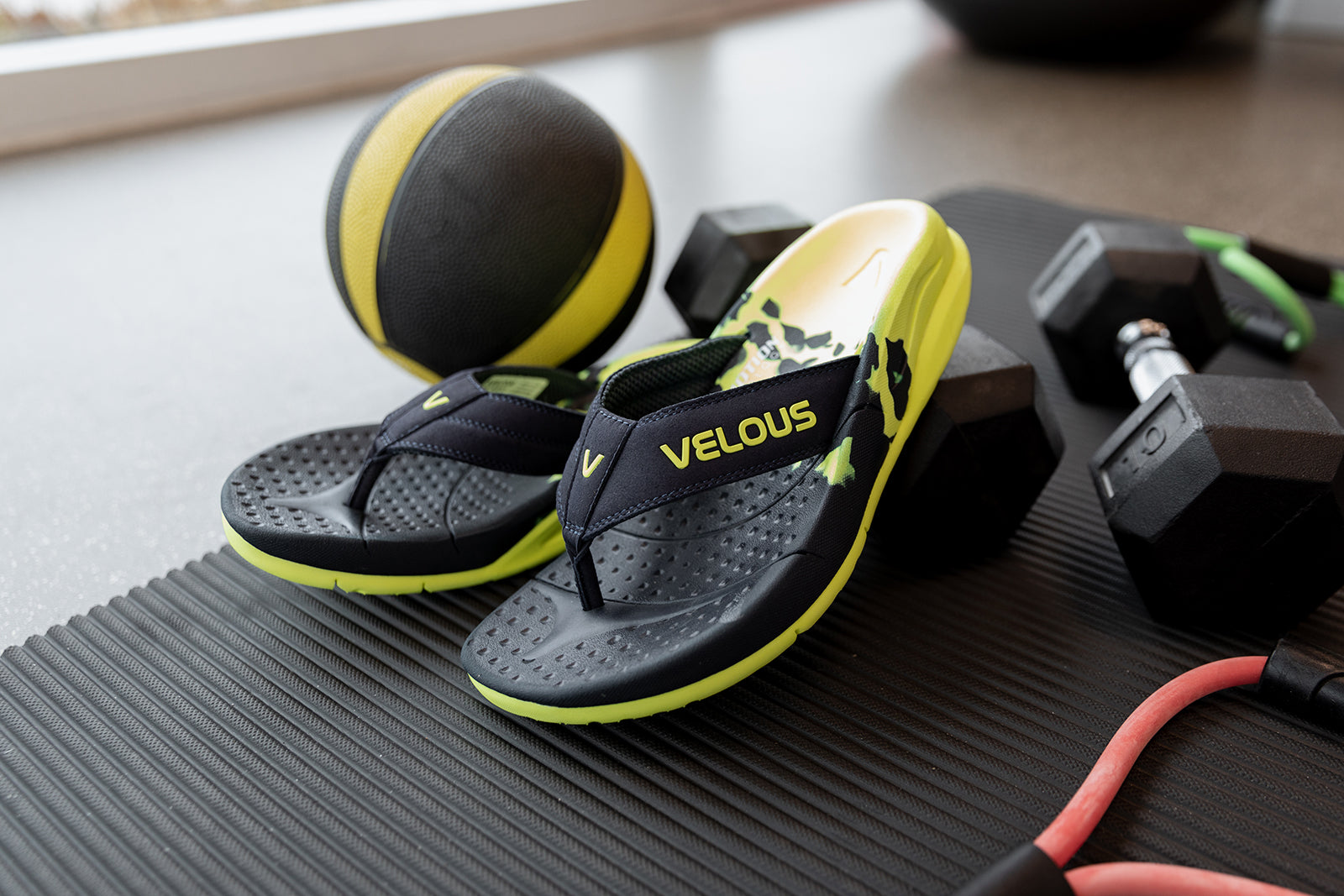
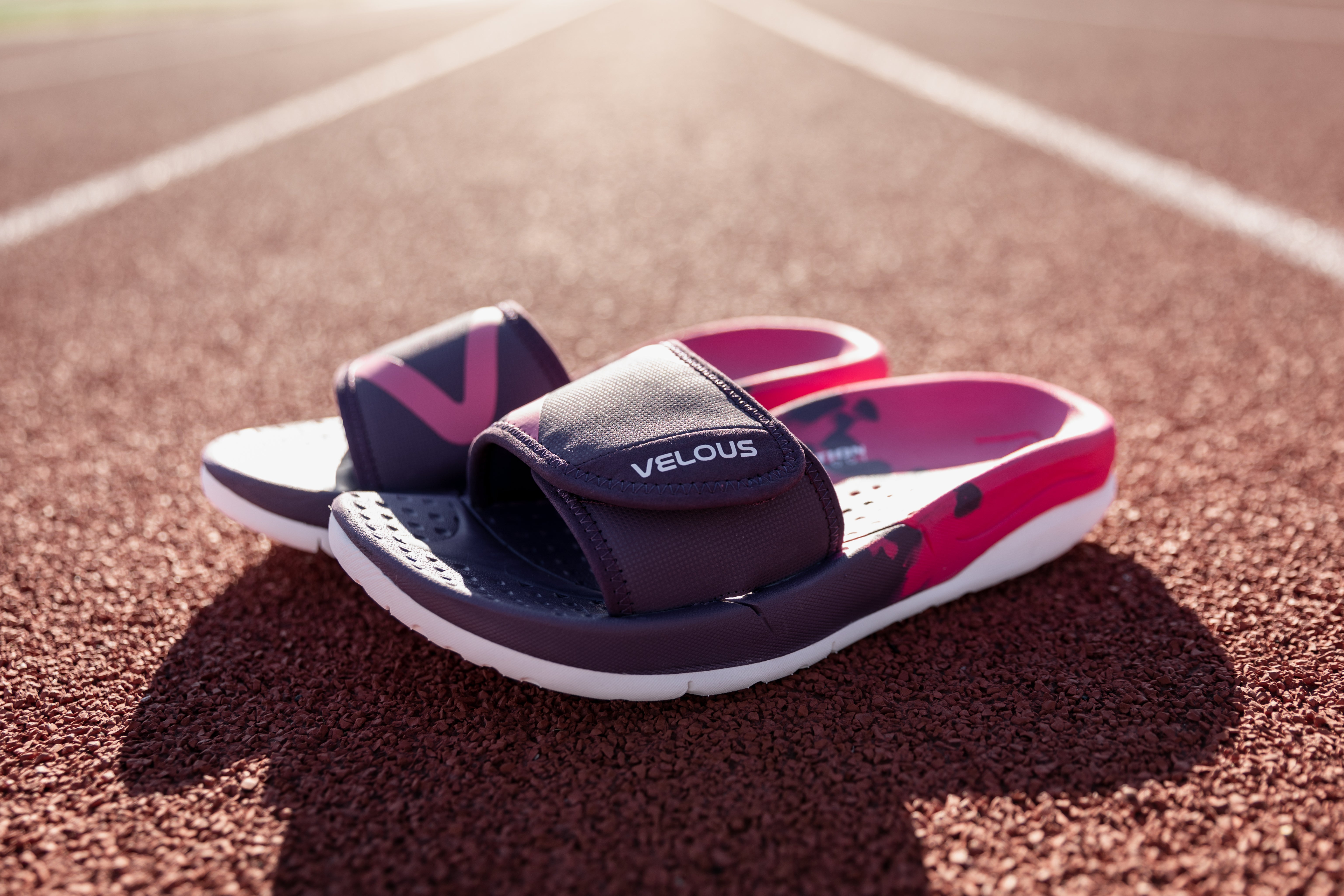
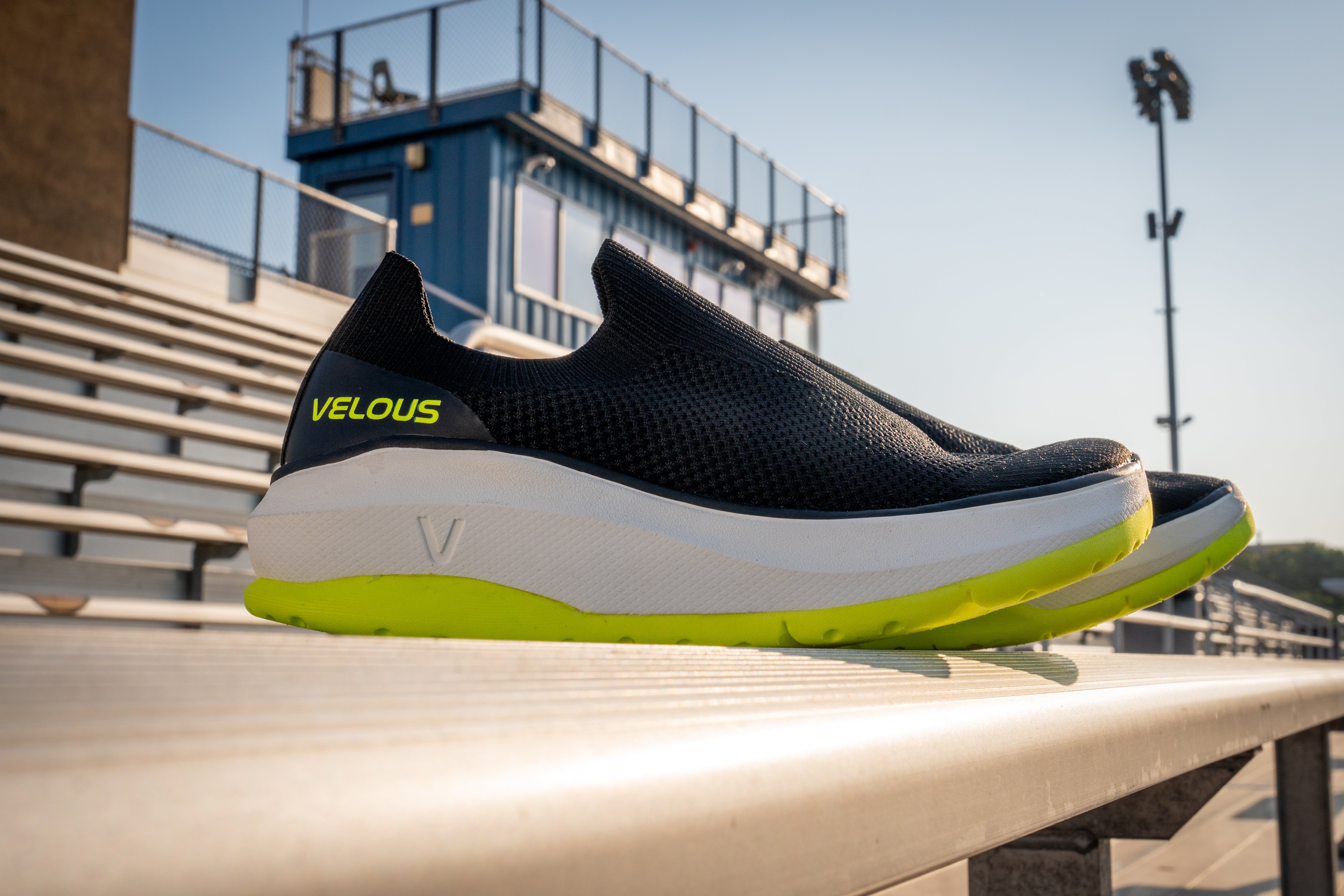
VELOUS recovery sandals are designed with all of these principles in mind — built for athletes who take their recovery as seriously as their training.
Conclusion
Cycling demands a lot from your body. The miles you put in are only half the equation — how you recover determines how well you perform next time, and how long you stay injury-free over the long term.
Recovery footwear is one of the simplest, most effective, and most underused tools available to cyclists. It costs nothing in time, requires no extra effort, and delivers real, cumulative benefits for your feet, your lower legs, and your overall recovery quality.
You invest in your bike. You invest in your kit. You track your training and optimise your nutrition. It's time to invest in what happens the moment you step off the pedals.
Unclip. Step in. Recover smarter.
Leave a comment