


Recovery Sandals for Long-Distance Walking: Camino de Santiago & Nijmeegse 4Daagse
You've just finished a 30-kilometre day on the Camino Français. Your boots are off, your feet are throbbing, and the last thing you want to do is squeeze them back into anything with a heel counter. Or picture this: it's day three of the Nijmeegse 4Daagse, the world's largest multi-day walking event, and your feet have already logged nearly 100 kilometres of Dutch asphalt and country paths.
What you need — what every serious long-distance walker needs — is a pair of supportive recovery sandals that weigh almost nothing and do everything.
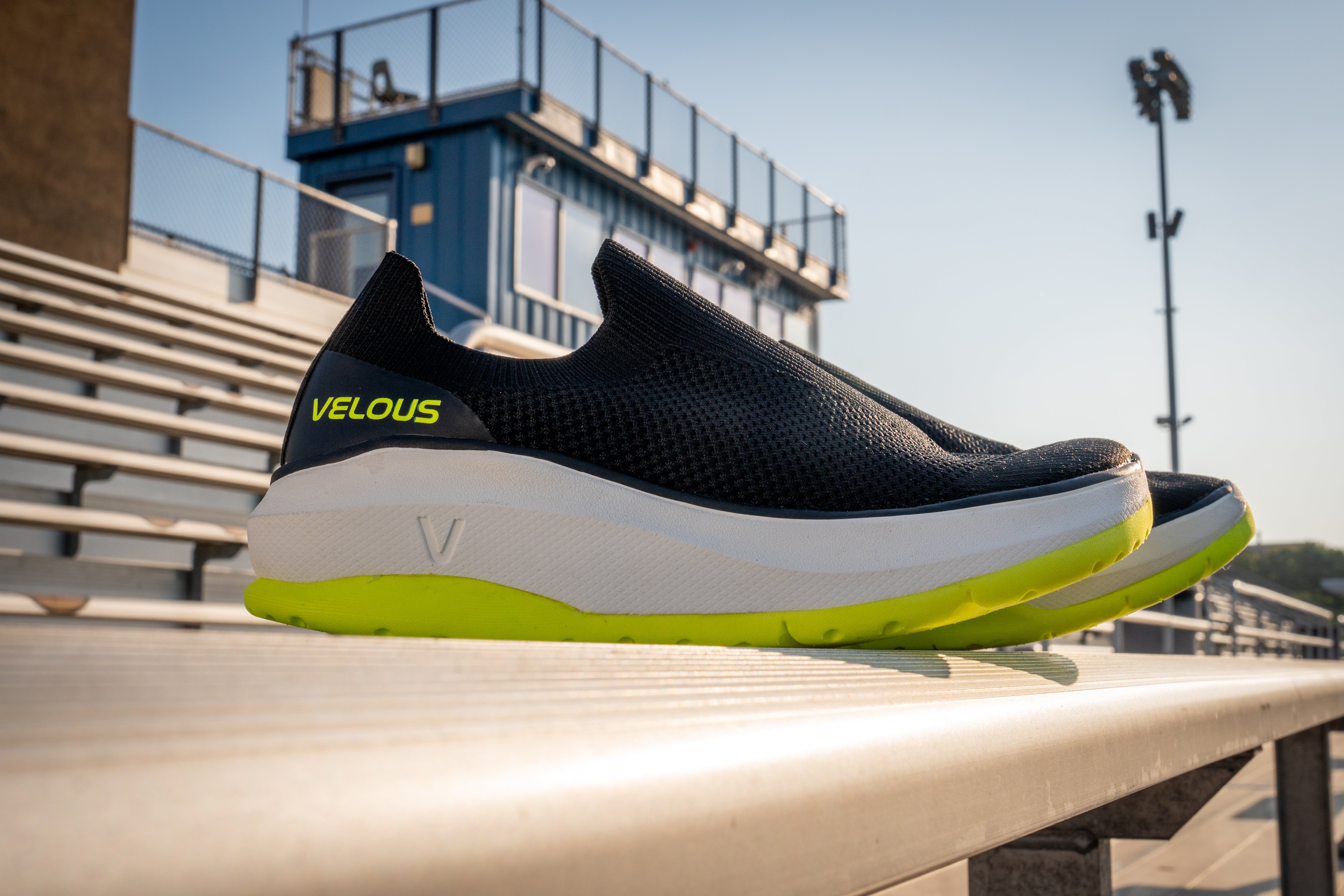
But here's what many walkers don't realise: VELOUS supportive recovery sandals and slides aren't just for the end of the day. They're a lightweight walking option for flatter, well-maintained sections of long-distance routes and an excellent recovery sandal after every stage. Their breathable design, supportive footbed and responsive cushioning also make them a comfortable option during easier walking sections.
The Camino de Santiago: A Walk That Demands Smart Footwear Choices
The Camino de Santiago is one of the world's most iconic pilgrimage routes. The most popular path, the Camino Français, stretches roughly 780 kilometres from Saint-Jean-Pied-de-Port in France to Santiago de Compostela in northwest Spain. Walkers — known as peregrinos — typically complete it in 30 to 35 days, covering an average of 22 to 25 kilometres per day.
Thru-hiking the Camino is a physical undertaking that rivals any endurance sport. Blisters, plantar fasciitis, shin splints, and swollen ankles are not rare complaints — they are practically rites of passage. Experienced pilgrims know that what you do between walking stages matters just as much as the kilometres you log.
On flatter, well-paved sections — the long stretches of meseta in central Spain, the quiet country roads of Galicia, the cobbled town squares — a lightweight sandal with proper support can be a genuine alternative to a heavy boot. Your feet breathe. Your gait relaxes. And the cumulative stress on your joints is meaningfully reduced.
The Nijmeegse 4Daagse: Four Days, 160 Kilometres, One Unforgettable Challenge
The Nijmeegse 4Daagse — officially the Internationale Vierdaagse Afstandsmarsen Nijmegen — is held every July and draws tens of thousands of participants from across the globe. Distances range from 30 to 50 kilometres per day depending on your category, and the event is as much a cultural celebration as it is a physical challenge.
What makes the 4Daagse particularly demanding is the cumulative load. Unlike a single marathon, you are asking your body to perform at a high level on four consecutive days. By day two, your feet have already absorbed the impact of a full marathon. By day three, fatigue is systemic — not just muscular, but neurological. Your gait changes. Your posture shifts. And your feet, if not properly cared for, begin to break down.
Walking 160 Kilometres in Recovery Sandals: A Real-World Proof Point
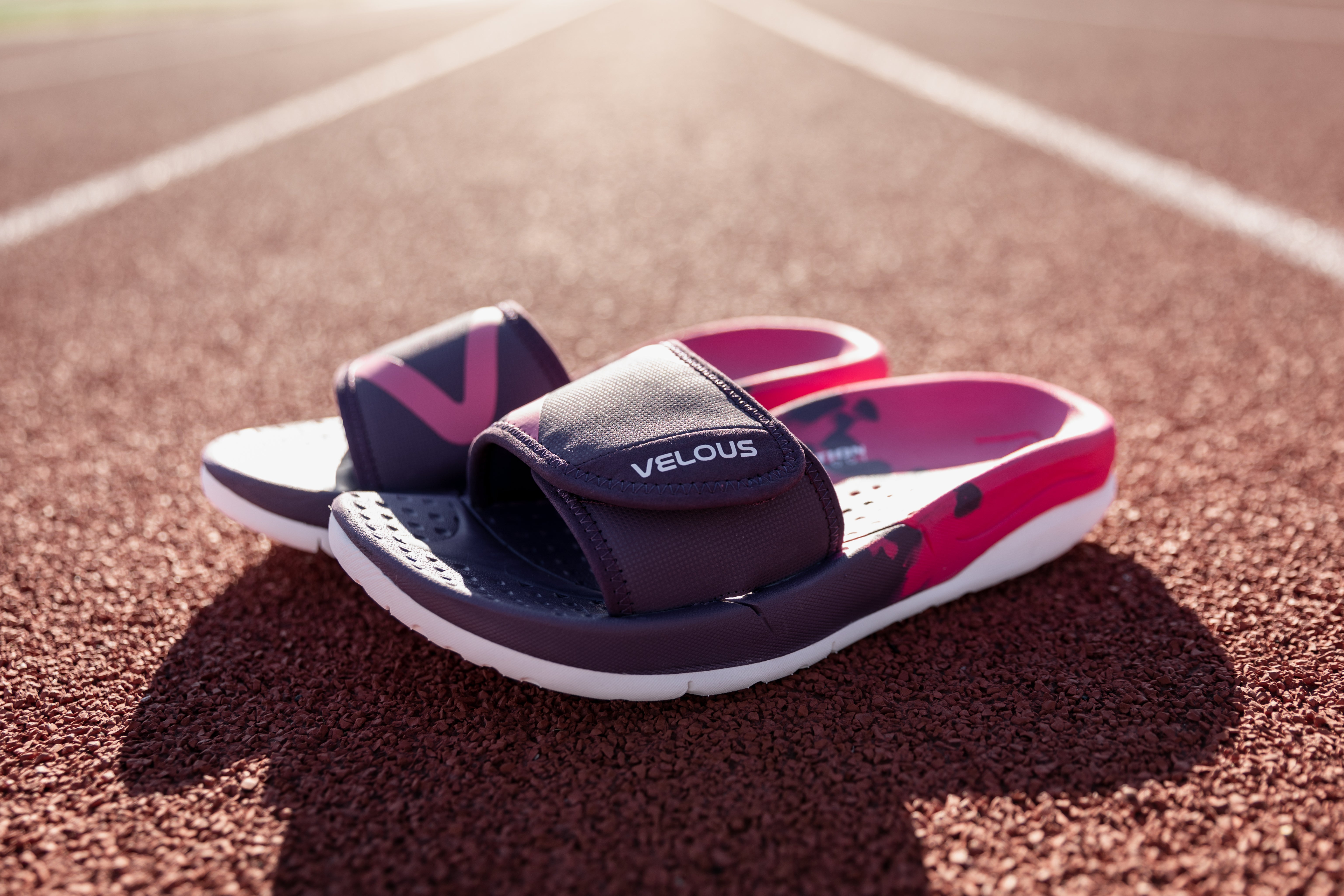
What if you didn't just alternate — but completed the entire 4Daagse in recovery sandals? That's exactly what Dick Wijsman did. He walked all 160 kilometres of the Nijmeegse 4Daagse in his VELOUS Active Adjustable recovery slides — and finished without a single blister or foot problem. His full account is documented in his detailed 4Daagse report.
His experience doesn't mean recovery sandals are a universal replacement for hiking boots. Every walker is different, and proper footwear depends on terrain, distance, and individual biomechanics. But it does demonstrate something important: recovery footwear has earned a serious place in the world of long-distance walking — not just as an afterthought, but as a genuine performance tool.
Alternating Footwear: A Smarter Approach to Long-Distance Walking
The idea of alternating between hiking boots and recovery slides during a multi-day event may sound unconventional. But more and more walkers are discovering the benefits — and the logic is straightforward.
Good hiking boots remain essential for stability, grip, and protection on technical terrain. What's worth considering is what happens when you give your feet a different kind of support mid-stage: a change of load distribution, more airflow, and the natural movement that an open, ergonomic sandal allows. Even 30–60 minutes out of a closed boot can meaningfully reduce the build-up of heat, moisture, and pressure that leads to blisters and fatigue.
Recovery slides are not a replacement for hiking boots. They are a valuable complement — and knowing when to use each is part of walking smart over long distances.
Why Recovery Sandals Are More Than Post-Walk Footwear
The traditional view of recovery sandals is that they belong at the end of the day. That's a good start — but it undersells what a well-engineered sandal can actually do. VELOUS recovery sandals and slides are built around four properties that make them genuinely useful during a long-distance walk, not just after it.
Lightweight
A pair of VELOUS slides weighs a fraction of a hiking boot. On a multi-week trip, that weight difference compounds — not just in your pack, but on your feet. Every unnecessary gram of footwear weight increases the energy cost of each step. Switching to a lighter sandal for a flat, easy stretch of trail is a simple way to conserve energy for the kilometres ahead.
Breathable
Hiking boots trap heat and moisture. After several hours of walking, the interior of a closed shoe becomes a warm, damp environment — exactly the conditions that cause blisters and skin breakdown. An open sandal allows air to circulate freely around the foot, reducing moisture build-up and giving the skin a chance to breathe. Even 30–60 minutes in open footwear mid-stage can make a meaningful difference to foot health over a multi-day event.
Supportive
This is where VELOUS differs from a standard flip-flop. The Tri-Motion™ Technology built into every pair supports the three key phases of the gait cycle — heel strike, midstance, and toe-off — providing genuine biomechanical support even during active walking. A deep heel cup and contoured arch support keep your foot properly aligned, whether you're walking a flat Dutch polder road or a cobbled Galician village square.
Cushioned
The Foamotion Formula midsole provides responsive, rebounding cushioning that reduces impact on hard surfaces. On the paved roads and cobblestones that make up a significant portion of both the Camino and the 4Daagse route, this cushioning is not a luxury — it's protection for your joints over hundreds of kilometres.
How to Use VELOUS Sandals During a Multi-Day Walk
There's no single right way to integrate a lightweight sandal into your walking routine. Here are the approaches that work best for different walkers.
The Alternating Method
Start your stage in your hiking boots or trail shoes. After 10–15 kilometres, find a good rest point — a café, a fountain, a shaded bench — and switch to your VELOUS sandals for the next stretch. This rotation reduces the cumulative pressure on any single hotspot and gives your feet a change of environment mid-stage. Switch back to your boots for technical terrain or the final push into town.
The Easy-Stage Method
On shorter, flatter stages — or on rest days when you're exploring a town — wear your VELOUS sandals as your primary footwear for the entire day. Many Camino walkers find that stages under 15 kilometres on good terrain are entirely manageable in a well-supported sandal. The 4Daagse route includes stretches of flat Dutch countryside that are similarly well-suited to open footwear.
The Recovery Method
The classic approach: boots on during the stage, VELOUS sandals on the moment you arrive at your accommodation. Combine with elevation, light stretching, and hydration for a complete evening recovery routine. This alone will make a measurable difference to how your feet feel on day two, three, and four.
How to Choose the Best Recovery Sandals for Long-Distance Walking
Not all sandals are created equal — and when you're walking 160 kilometres over four days or 780 kilometres over a month, the difference between a cheap flip-flop and a purpose-built sandal is significant. Here's what to look for:
- Arch support and footbed contouring — a contoured footbed that mirrors the natural shape of the foot distributes pressure evenly and reduces strain on the arch, especially important for walkers who pronate or have high arches.
- Cushioning that rebounds — standard foam compresses and stays compressed. High-quality midsoles return energy to your foot rather than simply absorbing it, reducing fatigue over long distances.
- Lightweight construction — every gram counts when you're packing for the Camino. A sandal that weighs 300–400 grams is a non-negotiable addition to your pack.
- Durability and grip — you need sandals that can handle cobblestones in Burgos, wet grass in Galicia, and the tiled floors of a Spanish albergue.
- Easy on, easy off — after 30 kilometres, you don't want to fiddle with buckles or laces. Slip-on slides are ideal for the end-of-day routine and for quick mid-stage switches.
Why Lightweight Recovery Sandals Belong in Every Hiking Backpack
One of the great tensions of long-distance hiking is the conflict between packing light and having everything you need. A quality lightweight sandal falls firmly in the essential category. Experienced Camino walkers and 4Daagse veterans consistently recommend them — and yet many first-timers skip them to save weight, only to wish they hadn't by day three.
VELOUS recovery sandals and slides are designed with travel in mind: minimal bulk, maximum function. They compress easily, dry quickly, and add almost nothing to your pack weight. Tuck them into the side pocket of your rucksack and forget they're there — until the moment you need them most.
Recovery Is Performance
There's a mindset shift that separates experienced endurance athletes from beginners: the understanding that recovery is not the absence of training — it is training. The adaptations that make you stronger, more resilient, and more consistent happen during recovery, not during the effort itself.
This applies directly to multi-day walking events. The peregrino who sleeps well, eats well, and recovers well will walk better on day 15 than on day 1. The 4Daagse participant who takes their evening recovery seriously — and who makes smart footwear choices during the day — will cross the finish line on day four with energy to spare.
Investing in proper footwear is an investment in your performance. Not just for the hours after the walk, but for every kilometre of it.
Final Thoughts: Pack Smart, Walk Far, Recover Well
Whether you're planning your first Camino, training for the Nijmeegse 4Daagse, or simply someone who takes long-distance walking seriously, a lightweight, supportive sandal deserves a place in your kit — not just for the evenings, but for the journey itself.
VELOUS recovery sandals and slides are designed for exactly this: the full experience of a multi-day walk. Lightweight enough to pack without thinking. Breathable enough to wear mid-stage. Supportive and cushioned enough to make a real difference over hundreds of kilometres. And built to last across the kind of distances that test both body and gear.
Your feet carry you every step of the way. Give them the footwear they deserve — from the first kilometre to the last.
Frequently Asked Questions About Recovery Sandals
Can you walk the Camino de Santiago in recovery sandals?
Many experienced walkers use supportive recovery sandals on flatter, well-maintained sections of the Camino. Technical terrain is generally better suited to hiking boots or trail shoes.
Are recovery slides suitable for long-distance walking?
Recovery slides can be an excellent option for easier sections, rest days or alternating with hiking boots, depending on the terrain and your personal preference.
Should I pack recovery sandals for the Camino?
Yes. Lightweight recovery sandals provide comfort after each stage and can be a valuable addition to your footwear rotation during longer journeys.
What makes a good recovery sandal?
Look for supportive arch design, responsive cushioning, lightweight construction and a durable outsole with good grip.
Can recovery sandals replace hiking boots?
For most walkers, no. Recovery sandals work best alongside hiking boots or trail shoes, giving your feet a chance to recover while remaining supported.
Ready for Your Next Adventure?
Visit your nearest VELOUS retailer, explore the VELOUS collection of recovery sandals, or contact us at hikingonvelous@velousfootwear.nl for personalised advice.
About the Author
Dick Wijsman has more than 35 years of experience in the international footwear industry. In 2024 he completed the full 160 km Nijmeegse 4Daagse wearing VELOUS Active Adjustable recovery sandals, finishing without blisters or foot problems. His personal experience and decades of footwear expertise form the basis of this guide.